
What Motherhood Taught Me About Grief (And Vice Versa)
There is a school supplies aisle in Carrefour that I will remember for a long time.
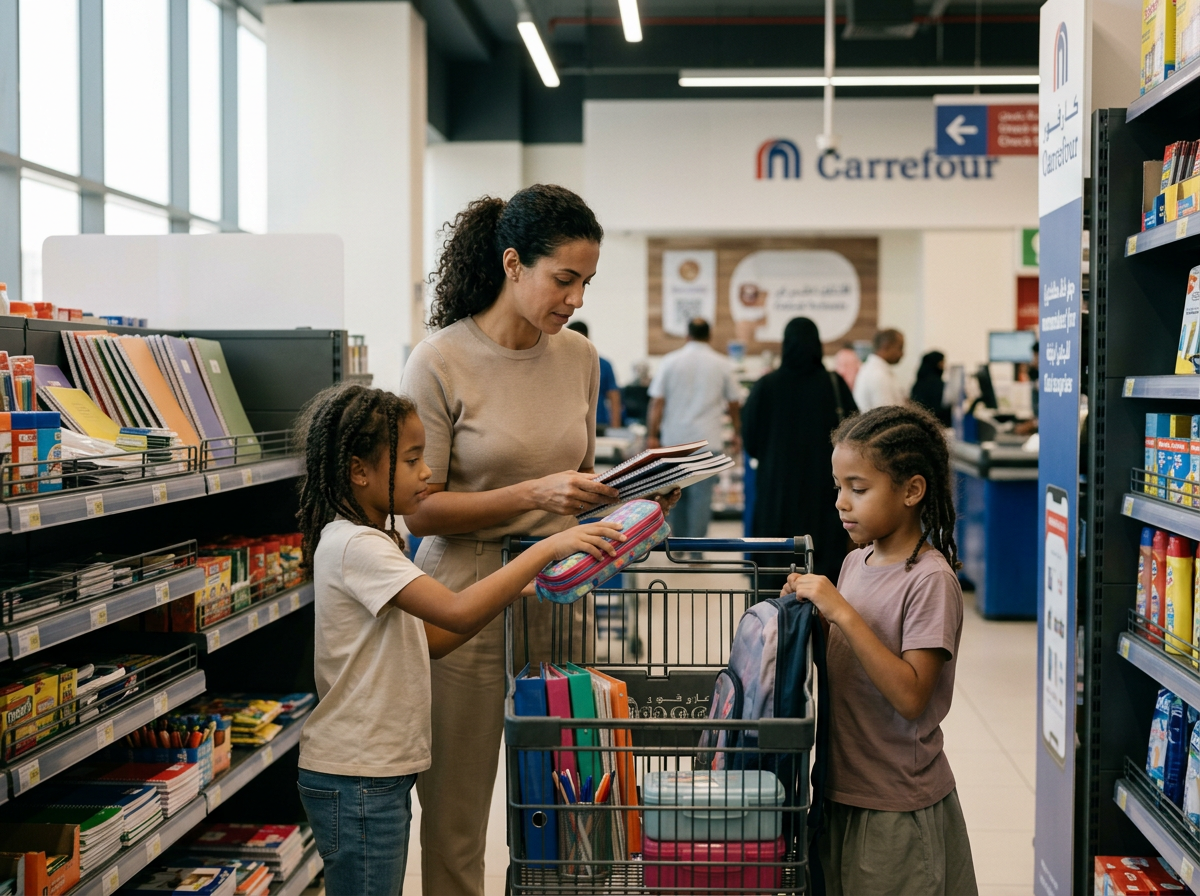
August. Back-to-school season in Dubai — that stretch of heat where the city refills itself, and the shops stock ring binders next to sunscreen. My twins were on either side of me, both nine years old, both talking at once, both with opinions about which pencil case was acceptable.
I had the list. I had the budget in my head. I had everything I needed. Except the person who used to do this with me.
Seven months into widowhood, I am still learning things — about grief, about myself, and, unexpectedly, about what it means to be a mother.
The specific weight of being the only one
When people talk about losing a spouse, they talk about loneliness. About grief. About the paperwork and the financial questions that arrive in the first weeks.
Fewer people talk about the particular experience of becoming the only parent. Not a parent who sometimes does things alone — but the parent. The one who makes every decision, fields every question, carries every concern about two small human beings who are also, in their nine-year-old way, grieving.
I thought I was prepared for the logistics. You adapt to logistics. You build routines. You manage. What I wasn't prepared for was the silence in the decision-making.
My husband knew our children the way only someone who has been there from the beginning can. He knew which one needed more reassurance and which one needed more space. He knew when I was overthinking and when I was right to be worried. That knowledge, accumulated over nine years of parenting together, is gone.
Now I have to be both people. And some days, I genuinely don't know if I'm getting it right.
What I've learned about grief through motherhood
Motherhood doesn't pause for grief. It sounds obvious. It isn't, until you're living it. Grief arrives when it arrives — at seven in the morning when you're making breakfast, in the car on the way to an activity, in the middle of a homework argument. It doesn't negotiate with your plans for the day. And children don't pause either. The twins still need feeding. They still argue. They still ask questions that deserve a proper answer, on days when I'm barely holding my own thoughts together.
What I've found is that grief and motherhood live alongside each other. Not alternating, not competing, alongside. You can be deeply sad and still make a decent dinner. You can be exhausted and still find genuine delight in something your child says. You can be falling apart inside and still be present enough.
I had to learn that last part. My version of "good enough" mothering had been calibrated for a two-parent household — a standard I'd absorbed over years without ever examining it. It wasn't built for this. And slowly, I'm replacing it with something that is.
The part that's harder than expected — and the part that isn't
Harder: being the only adult who truly knows my children. There's no one to cross-reference with, no one who will notice the same things I notice or catch what I miss.
Not as hard as I feared: almost everything else.
I am more present with my children than I have been in years. Not because I'm a better parent — I'm not sure that's true, but because the texture of daily life has simplified. It is quieter. We have found our own rhythm. My children and I know each other in a way that has deepened over these months, because the competing demands of a shared adult life are no longer in the room. This is not a silver lining. I would trade all of it. But it is the truth of what's happening.
A note for women navigating this in the UAE
If you are a widow or single mother in Dubai, you already know that many of the systems here were not designed with you in mind. Residency rules, school processes, insurance policies — much of it still assumes a co-parent or a male head of household somewhere in the picture.
Knowing your rights matters. The UAE has updated its personal status law and its residency provisions for widows in recent years, and many women don't know what they're entitled to until something goes wrong. At HerSphere, we cover these practical issues regularly — not to overwhelm, but because being informed is one of the most concrete ways to protect yourself and your children.
The thing I keep coming back to
Every week I learn something new about what it means to mother when you are also grieving, building a business, and raising two children far from your extended family.
Some weeks the lesson is hard. Some weeks it surprises me with how gentle it is. This week: showing up is the whole thing. Not showing up perfectly. Not showing up with all the answers. Just showing up — consistently, honestly, with love is enough.
Most days I manage it. That has to count for something.
Anna Heenan is the founder of HerSphere.ae, a UAE-based platform supporting widows, single mothers, and women rebuilding their lives — financially, legally, and emotionally. She is a widow, a homeschooling mother of twins, and lives in Dubai
